
4 Ways to Turn your Business Chaos into a Masterpiece
Written by: Roberta Vommaro
The Renaissance Business Model
"I can't seem to structure all the various services my business offers, or all the ideas I have... It feels so chaotic." If that statement strikes a chord with you, then you're not alone.
In a world where AI is starting to pave the way for new industries, reinvention and yes, displacement, it's not surprising that businesses face a new type of challenge.
Businesses are no longer single-dimensional entities.
And, while this diversity can provide a competitive edge, it can also cause stress, confusion, and utter chaos. So how to create structure when things seem so messy?
1.Embrace Chaos

The first step is understanding that chaos is part of the creative process, particularly when new concepts are introduced. This is when leaders with a diverse background and multi-passions (the renaissance types, as I call them) can really shine.
Tapping into and building on diverse skills, particularly when they involve multiple industries, allows businesses to tackle problems from multiple angles, a trend that has been seen in at large too.
In the modern corporate sector, this is called “industry convergence”.
And convergence has become a current tendency in response to the waves of advanced technologies: AI, robotics, the Internet of Things (IoT), digital biology, blockchain, global gigabit connectivity, and so on.
Because these new technologies are popping up at quantum speed (often quite literally!), traditional industry models are not able keep up with the new, emerging ones. Convergence has become not only a trend, but a necessity.
2. Align Your Legal, Logistical and Strategic Considerations
Legal structures determine the framework within which your business operates, from taxation to liability. As a lawyer, I am here to tell you, they matter. A strong legal structure not only protects you against future problems, but it also creates a protective container around your business.
In a nutshell: the right legal structure saves you money. For instance, a simple question of where to incorporate your business can save you several thousands of dollars per year worth of tax.
“The Renaissance Business Model” involves expansion through converging different skills, services, segments, and even multiple industries, therefore the logistical and legal aspects must be adapted to ensure protection while allowing for flexibility and innovation.
One thing to keep in mind is that logistical and legal considerations follow a first, and very important, step: strategic planning, which for Renaissance businesses often involve continuous reshaping.
This is specially important when the business was originally created following a model prior to the AI innovation we’re all currently experiencing.
A new strategy for expansion that allows for convergence and embraces technology is what will put an end to endless logistical loops. And this can be done while preserving your business’ broader goals and objectives, and adapting to the new market reality.
3. Don't Stick to Cookie-Cutter Formulas
Quick fixes and one-size-models can be appealing, but for a diverse business model they rarely fit.
Because a Renaissance business often involves multiple layers, services, and industries, niche-based models are quite simply, not applicable.
A bespoke strategy is the best way to protect your business and maximize profit.
4. Connect with your MISSION, not just your Business.
While navigating change, reinvention, or this new technological era, it is important to reconnect with the overarching principles of your business, mission and vision.
Because creating structure amidst chaos isn't just about organizing the practical elements of your business. In times of change it is important not to lose sight of purpose and the values your business embodies, because it is through the mission that we unlock the through-line that is the backbone of your enterprise. And it is through the mission that we give meaning to changes and redirection, something that affects your business from the leadership level all the way through the corporate structure.
Connecting to your business’ mission considers the human element in every aspect of restructuring.
This involves acknowledging and respecting the elements that sets your business apart.
Creating structure amidst chaos is a continuous process.
It requires patience, creativity, and a willingness to think outside the box. It requires you to find order in the disorder, a common note in the noise, and a through-line that ultimately reflects your business’s mission.
Originally published on November 19, 2024.
Watch my TEDx Talk
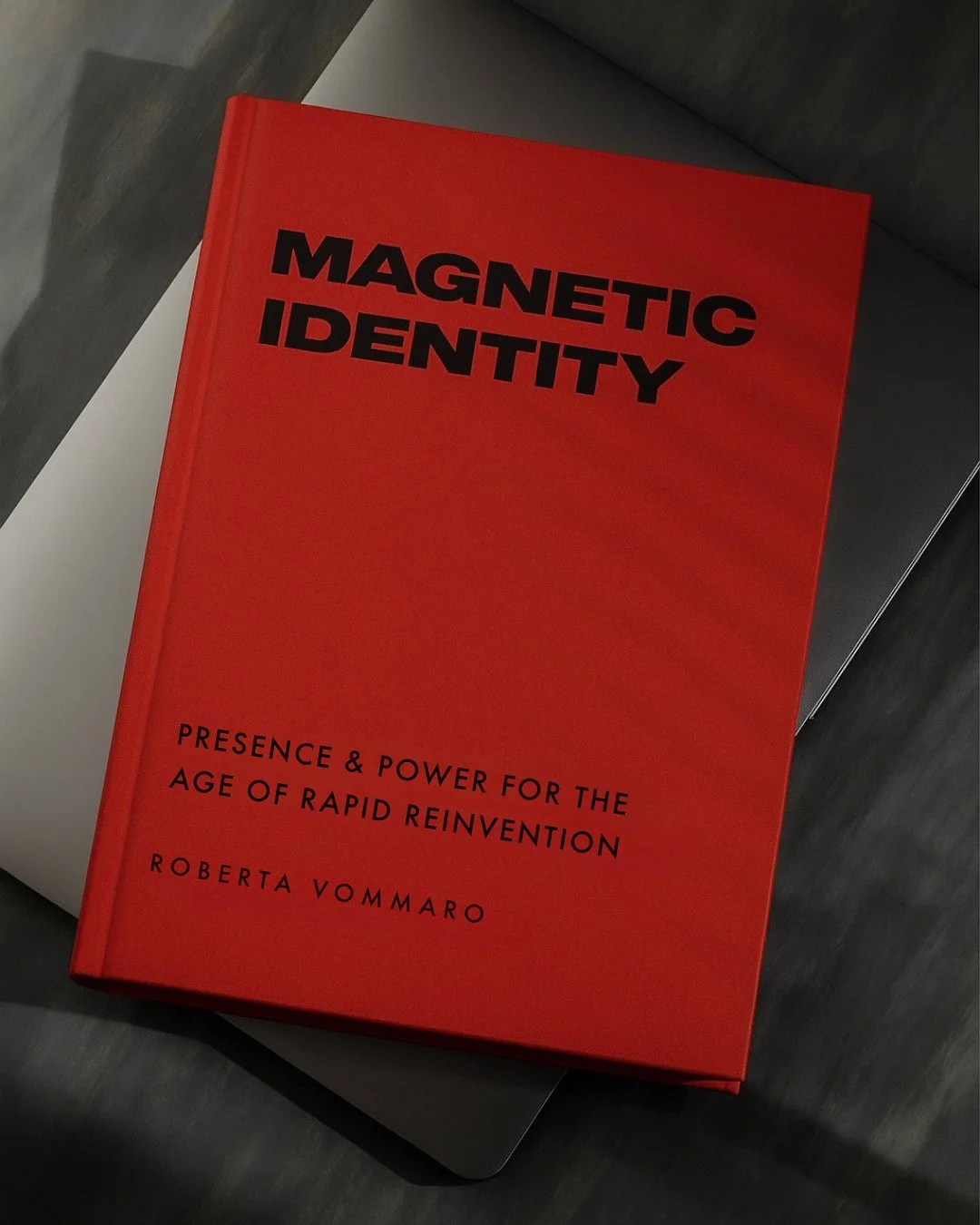
Get the Book
Work with Me
Whether your organization needs support with facing the challenge of reinvention, or you want to explore keynotes and leadership advisory, I’m happy to have that conversation.